How Benchtop EPR Improves Radical Detection in Polymer Labs
If your lab works with polymers, you know how crucial it is to detect radicals quickly and accurately. Free radicals play a big role in polymer stability, aging, oxidation, and cross-linking. However, traditional EPR systems can be complex, expensive, and take up a lot of space, making them hard to use for routine analysis.
Benchtop EPR systems, like the CIQTEK EPR200M, are changing the way polymer research is done. They bring fast, easy, and reliable radical detection right to your lab bench, without the need for specialized cryogens or long training. In many European polymer labs, where efficiency, space, and reproducibility are critical, these systems are becoming an increasingly popular choice.
Why Radical Detection Matters in Polymer Research
Polymers are used everywhere, from industrial materials to packaging and medical devices. Understanding how free radicals affect these materials is essential to improving performance and durability. Free radicals can cause oxidation, degradation, and unexpected chemical reactions, which can compromise polymer quality.
EPR spectroscopy remains the most direct and reliable way to detect unpaired electrons, offering insights that methods like FTIR or DSC cannot provide. For researchers aiming to monitor polymer aging, evaluate stabilizers, or test oxidation resistance, EPR is a must-have tool.
Challenges with Traditional EPR Systems
Even though EPR is highly valuable, traditional EPR systems often come with barriers that make routine use difficult. These challenges are particularly relevant for mid-sized university labs and industrial R&D labs across Europe and the Americas.
1. Complexity of Operation
Traditional EPR systems often require highly trained specialists. Setting up experiments, calibrating instruments, and interpreting results can be complicated and time-consuming. In labs where EPR expertise is limited, this can slow down research.
2. Limited Accessibility
Large EPR systems take up significant space and are often shared between multiple teams. Scheduling time on these instruments can be frustrating and may delay experiments.
3. High Cost and Infrastructure Requirements
Traditional systems may require liquid helium or nitrogen, regular maintenance, and dedicated lab space. For labs balancing tight budgets and space constraints, these systems are not always practical.
What is Benchtop EPR?
Benchtop EPR systems are compact, easy-to-use, and designed for modern labs that need fast and reliable results. Systems like the CIQTEK EPR200M allow researchers to start measurements quickly without a complex setup or long training. These systems bring EPR capabilities directly to the lab bench, making radical detection accessible to more users.
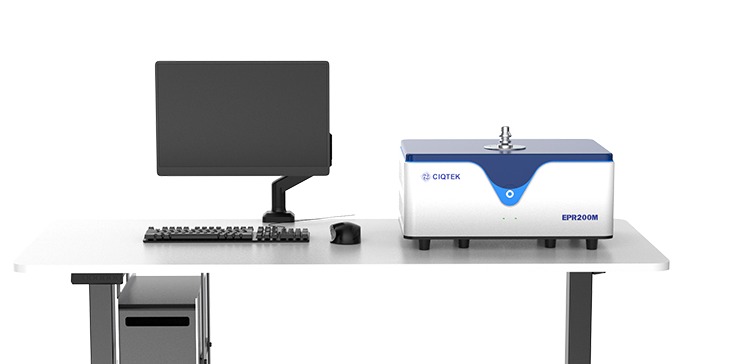 CIQTEK Benchtop EPR
How Benchtop EPR Improves Radical Detection in Polymers
Benchtop EPR offers several advantages that directly address the challenges of polymer research.
1. Faster Experiment Turnaround
With minimal setup, benchtop EPR systems allow researchers to measure radicals immediately. This is ideal for early-stage research, where rapid screening of polymer stability is essential.
2. Ease of Use for Non-Experts
Intuitive touchscreen interfaces and guided workflows mean that even users without specialized EPR training can operate the system effectively. In European labs with limited EPR specialists, this makes a big difference.
3. Flexible Placement in the Lab
The compact design allows benchtop EPR instruments to fit into small lab spaces, near production lines, or alongside other analytical tools. This flexibility makes it easier to integrate EPR into routine workflows.
4. Reliable Results for Routine Analysis
Benchtop EPR provides consistent and repeatable results, ensuring that researchers can trust the data for everyday polymer experiments.
Typical Applications in Polymer Research
Benchtop EPR is particularly useful for common polymer research scenarios:
1. Polymer Aging Studies
Monitoring radical activity over time to predict material lifespan.
2. Oxidation Stability Testing
Evaluating how polymers respond to environmental stress or exposure to oxidizing agents.
3. Additive and Stabilizer Evaluation
Assessing the effectiveness of antioxidants and other stabilizers in preventing polymer degradation.
These user cases are especially common in polymer research labs across Europe, including university departments and industrial R&D facilities.
Real CIQTEK Case Study
At CIQTEK, the EPR200M has been made available to multiple research labs across Europe, offering a compact and user-friendly solution for free radical detection in polymers. Its benchtop design allows labs to integrate EPR capabilities without the need for large infrastructure or highly specialized staff.
Many European polymer research teams have expressed interest in benchtop EPR systems for applications such as polymer aging studies, oxidation stability testing, and additive evaluation. By providing a straightforward and accessible way to perform EPR measurements, systems like the EPR200M support routine laboratory workflows and help labs explore new applications efficiently.
These developments highlight that benchtop EPR is increasingly seen as a practical tool for laboratories looking to simplify radical detection while maintaining reliable experimental practices.
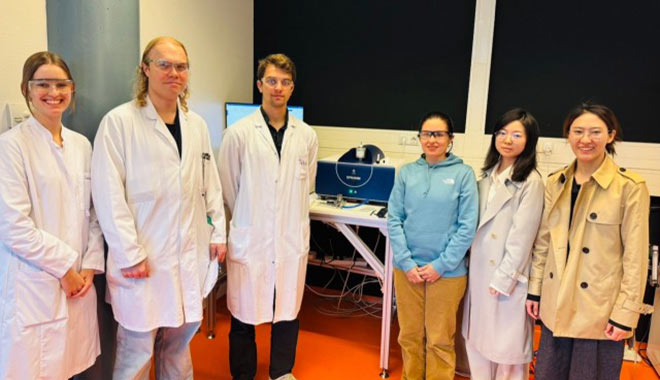
Benchtop EPR systems like the CIQTEK EPR200M are transforming polymer research by making radical detection faster, easier, and more accessible. European labs, especially those with limited space, staff, or budget, are increasingly embracing these systems to enhance productivity and maintain high-quality results.
If you want to explore how a benchtop EPR can benefit your lab, contact CIQTEK to schedule a demo or request application support. info@ciqtek.com
