EPR spectrometers are crucial tools for many research labs, but upgrading them can feel like a big financial burden. The good news is that modernizing your EPR system doesn’t have to drain your budget.

With CIQTEK EPR Spectrometer Modernization & Upgrade services, you can enhance your system’s performance while keeping costs low. Whether you're dealing with outdated temperature control, slow data processing, or low-resolution probes, there are ways to upgrade your system cost-effectively.


1. Identify the Core Issues Holding Your System Back

Before jumping into an upgrade, take some time to assess your system’s performance. What’s causing delays or poor data quality? Some of the most common pain points in older EPR systems include:

  • Inconsistent temperature control: If your VT system isn’t performing as expected, it can throw off your experiments.

  • Slow data processing: Outdated hardware or software can slow down your workflow, affecting the overall efficiency of your research.

  • Low-resolution probes: If your probes are outdated, you could be losing valuable data precision.

By pinpointing these weaknesses, you can prioritize upgrades that will bring the most immediate benefits to your research.


2. Modular Upgrades: The Key to Staying Within Budget

Instead of overhauling your entire system, modular upgrades allow you to focus on specific components that need improvement. This way, you’re not paying for an entire new system, just the parts that will truly make a difference. Here are some areas where you can make upgrades that will improve your system's performance:

  • VT System: If your current temperature control system is outdated or malfunctioning, upgrading it can make a world of difference. CIQTEK’s Liquid Nitrogen VT System is a cost-effective way to enhance your temperature control, offering more stability and precision for sensitive experiments. Plus, it’s compatible with many legacy EPR systems, so you don’t need to replace your entire setup.

  • Data Acquisition System: An old data acquisition system can be a major bottleneck. Upgrading to newer hardware and software can significantly speed up your data processing, helping you get results faster and more efficiently.

  • Probes and Sensors: If your probes aren’t cutting it, upgrading to higher-resolution models will improve the quality and sensitivity of your measurements. These upgrades are relatively low-cost but can provide a noticeable improvement in your results.

By focusing on the key areas that need attention, you can give your system a major performance boost without spending a fortune.


3. Maximize Compatibility: Keep What Works

One of the most cost-effective ways to upgrade is to retain the core components of your system, like the magnet and electronics, and only replace the parts that are no longer functioning well. Many modern upgrades are designed to work seamlessly with older systems, allowing you to extend the life of your existing equipment while still achieving improved performance. For instance:

  • Software Upgrades: CIQTEK EPR control software can integrate with older hardware, giving you the latest features and improved data processing capabilities without replacing your entire system.

  • Hardware Compatibility: Whether it’s the VT system, probes, or other components, CIQTEK’s modular upgrades are designed to work with a wide range of legacy systems, so you don’t need to worry about replacing everything at once.

By focusing on compatible components, you can save money while still getting the performance boost you need.


4. Flexible Budgeting for EPR Upgrades

Upgrading your system doesn’t have to be a huge upfront expense. Here are a few strategies to help manage the cost:

  • Phased Upgrades: You don’t need to do everything at once. Start with the components that will give you the biggest improvement, such as upgrading the VT system or adding a new probe. Gradually upgrading one component at a time can help you spread out the costs.

  • Financing Options: Many suppliers, including CIQTEK, offer flexible financing plans that make it easier to budget for upgrades over time. This can help you get the upgrades you need without straining your research funds.

  • Custom Solutions: Every lab has different needs and priorities, and CIQTEK offers tailored solutions that fit both your system’s requirements and your budget. Whether you’re upgrading a few components or making more substantial changes, we can help you build a cost-effective upgrade plan that suits your needs.


Upgrading your EPR system doesn’t have to mean a huge investment. By taking a targeted, modular approach and focusing on the areas that will most improve your system’s performance, you can modernize your setup while staying within budget. With CIQTEK EPR Spectrometer Modernization & Upgrade solutions, you can enhance your system’s capabilities without the financial strain of a full overhaul.

CIQTEK EPR Spectroscopy Modernization Pathways

If you’re ready to explore how we can help you modernize your EPR system affordably, reach out to us for a consultation. Let’s find the right upgrade path for your lab’s needs and budget.

Many researchers rely on EPR spectrometers that have been running for years, sometimes even decades. These instruments are often still reliable for core measurements, but one part that tends to cause trouble over time is the variable temperature (VT) system.

If your current VT accessory is no longer functioning or delivers unstable temperature control, you don’t necessarily need to replace the entire spectrometer. Instead, a new VT system for old EPR instruments can be a practical, cost-effective solution.


Why Upgrade the VT System?

Temperature Stability for Better Data

A modern EPR VT upgrade provides precise nitrogen or helium cooling, ensuring stable temperature ranges for sensitive EPR experiments. This reduces noise and improves the reproducibility of your spectra.


Compatibility with Existing EPR Consoles

Many labs still operate some legacy models. A new VT system for old EPR can often be integrated with these setups, extending their useful life without the cost of a brand-new spectrometer.


Budget-Friendly Modernization

Buying a new EPR spectrometer can be out of reach for some labs. An EPR modernization path, such as replacing the VT system, allows you to modernize step by step, spreading out costs while improving performance where it matters most.


Signs Your VT System Needs Replacement

  • Difficulty maintaining stable temperatures during long runs.

  • Increased downtime due to malfunctioning cooling components.

  • Limited temperature range compared to today’s experimental needs.

  • High running costs from inefficient, aging systems.

If any of these sound familiar, your spectrometer is likely due for EPR Spectrometer Modernization & Upgrade.


CIQTEK’s Approach to EPR Modernization

EPR modernization is not just about replacing one part. It’s about extending the lifespan of your entire system while improving usability and performance. At CIQTEK, we provide a comprehensive modernization and upgrade service that covers much more than just VT systems:

  • Variable Temperature (VT) System Replacement
    Upgrade to a reliable nitrogen/helium VT system with cryostat options for stable, reproducible results.

  • Electronics and Console Upgrades
    Outdated electronics are a common cause of downtime. CIQTEK provides replacement modules and controllers that integrate seamlessly with legacy EPR instruments across all major models.

  • Magnet and Power Supply Maintenance
    Many older systems still have strong magnets but suffer from unstable power supplies. We provide replacement solutions to restore consistent magnetic field performance.

  • Software & User Interface Modernization
    Old software can limit productivity. CIQTEK upgrades include intuitive, Windows-based interfaces and modern data acquisition features while maintaining compatibility with existing hardware.

  • Detector & Accessory Integration
    From resonators to gas-flow controllers, CIQTEK can supply replacements or upgrades that fit seamlessly into your current setup.

What makes our approach unique is that we support virtually all legacy EPR models on the market. No matter how old the system is, our modernization solutions allow researchers to keep their instruments running reliably, without the need for a costly full replacement.

A Real-World Case: Modernization in the UK

One of our recent EPR modernization projects involved a research group in the UK. Their long-serving spectrometer was still technically sound but increasingly limited in performance. Instead of investing in a brand-new system, they chose CIQTEK’s EPR Spectrometer Modernization & Upgrade package.


A non-functioning VT system doesn’t have to mean the end of your EPR spectrometer. With the right EPR VT upgrade, you can breathe new life into older instruments, save money, and continue producing high-quality data.

If you’re exploring options for EPR modernization or need advice on upgrading your existing system, CIQTEK can help. Our EPR Spectrometer Modernization & Upgrade services are built to keep your research moving forward.


>> Contact us today to learn more about extending the life of your EPR with a new VT system for old EPR instruments.


FAQs about EPR Modernization & Upgrades

Q1: Do I need to replace my entire EPR spectrometer if the VT system fails?
A1: Not necessarily. In many cases, only the VT system needs to be replaced. A new VT system for old EPR instruments can restore stable temperature control and extend the overall lifetime of your spectrometer.


Q2: Are CIQTEK’s modernization services compatible with Bruker or JEOL systems?
A2: Yes. CIQTEK’s EPR modernization and upgrade solutions are designed to support almost all legacy models on the market.


Q3: Besides VT systems, what other parts can be upgraded?
A3: CIQTEK provides upgrades for electronics, consoles, magnets, power supplies, software interfaces, detectors, and accessories. This ensures your instrument can keep up with modern research demands.


Q4: How much does an EPR upgrade cost compared to buying a new spectrometer?
A4: A full replacement spectrometer is often a significant investment. An EPR upgrade package, such as a VT system replacement or console modernization, typically costs only a fraction of a new system while delivering substantial performance improvements.


Q5: Has CIQTEK’s modernization already been implemented in real labs?
A5: Yes. For example, a research group in the UK successfully upgraded their older spectrometer from CIQTEK. They reported improved stability, reduced downtime, and extended instrument life, without the cost of buying new.


Q6: How can I know if my EPR is suitable for an upgrade?
A6: If your instrument still produces usable spectra but suffers from unstable temperature control, frequent downtime, or outdated software, it’s likely a good candidate. CIQTEK’s team can evaluate your setup and recommend a tailored EPR modernization plan.

When it comes to outdoor adventures, a reliable watch is more than just an accessory—it’s your partner on every trail, every workout, and every challenge. The new Mars 5 multi-mode sport watch combines style and performance in ways that truly set it apart.


At first glance, the Mars 5 impresses with its sleek design and interchangeable straps available in three fashionable colors. But beneath its stylish appearance lies a powerful tool built for explorers. With 24/7 heart rate and SpO₂ monitoring, you get continuous insights into your health, while the 3D pedometer and sleep tracking ensure no detail of your daily activity is missed.


One of the standout features is its ability to store 14 days of exercise data. Whether you’re climbing mountains or training in the city, your performance history stays right on your wrist. The synchronization with the companion app makes it easy to review data, analyze progress, and share results instantly.


For night runners or campers, the luminous display and strong backlight provide visibility even in the darkest conditions. Add in 5ATM water resistance, and you’ve got a watch ready for rain, rivers, and sweat-filled workouts.


The Mars 5 is more than just a smartwatch—it’s a lifestyle upgrade. If you’re searching for a device that combines durability, intelligence, and style, the Mars 5 should be your next wrist companion.

Multi-sport mode smart health watch


Pushing the Frontiers of Bioprinting with CIQTEK SEM

At Ningbo University’s Institute of Intelligent Medicine and Biomedical Engineering, researchers are tackling real-world medical challenges by merging materials science, biology, medicine, information technology, and engineering. The Institute has quickly become a hub for wearable and remote healthcare innovations, advanced medical imaging, and intelligent analysis, intending to turn lab breakthroughs into real clinical impact.

Recently, Dr. Lei Shao, Executive Vice Dean of the Institute, shared highlights of his research journey and how CIQTEK's cutting-edge SEM is fueling his team’s discoveries.

CIQTEK SEM at Ningbo University’s Institute of Intelligent Medicine and Biomedical Engineering

CIQTEK SEM at Ningbo University’s Institute of Intelligent Medicine and Biomedical Engineering

Printing the Future: From Miniature Hearts to Vascular Networks

Since 2016, Dr. Shao has been pioneering biomanufacturing and 3D bioprinting, with the goal of engineering living, functional tissues outside the human body. His team’s work spans from 3D-printed miniature hearts to complex vascularized structures, with applications in drug screening, disease modeling, and regenerative medicine.

A 3D-printed miniature heart


Backed by funding from the National Natural Science Foundation of China and local research agencies, his lab has introduced several breakthroughs:

  • Smart bioprinting strategies: Using fluid rope-coiling effects with coaxial bioprinting to fabricate microfibers with controlled morphology, enabling the creation of vascular organoids.

  • Cryopreservable cell microfibers: Developing standardized, scalable, and cryopreservable cellular microfibers through coaxial bioprinting, with high potential for 3D cell culture, organoid fabrication, drug screening, and transplantation.

  • Sacrificial bioinks: Printing mesoscopic porous networks using sacrificial microgel bioinks, building nutrient pathways for effective oxygen/nutrient delivery.

  • Complex vascular systems: Constructing complex vascular networks with coaxial bioprinting while inducing in-situ endothelial cell deposition, solving challenges in vascularization of complex structures.

  • Anisotropic tissues: Creating anisotropic tissues using shear-oriented bioinks and pre-shearing printing methods.

  • High-cell-density constructs: Proposing an original liquid-particle support bath printing technique for high-cell-density bioinks, achieving lifelike bioactive tissues while overcoming the long-standing trade-off between printability and cell viability in extrusion-based bioprinting.

These advances are paving the way toward functional, transplantable tissues, and potentially even engineered organs.

Selected publications


Accelerating Discovery with CIQTEK SEM

With science advancing rapidly, biomedical research stands at the forefront of innovation. Higher efficiency often leads to greater breakthroughs. According to Dr. Shao, scanning electron microscopy (SEM) is one of the most indispensable scientific instruments at the Institute. Since adopting CIQTEK’s field-emission SEM, research efficiency and innovation at the Institute have advanced significantly.

“In the past, we had to send samples to other labs and often waited in long queues, which slowed down our research,” Dr. Shao explained. “Now, with CIQTEK’s SEM in-house, we can capture stunning details of biological materials, from 10 nm hydrogel particles to nanofiber networks inside composite hydrogels. The clarity is game-changing.”

The results speak for themselves: multiple high-impact publications on vascularized tissues, drug carriers, and biomaterials have already stemmed from this work.

Selected publications powred by CIQTEK SEMSelected publications


For Dr. Shao, the instrument has become more than a microscope:

“It’s an accelerator for innovation, helping us move faster from fundamental research to practical applications.”

From miniature 3D-printed hearts to the nanoworld revealed by SEM, Ningbo University’s Institute of Intelligent Medicine is proving how cross-disciplinary innovation can reshape the future of healthcare.

For anyone who lives for the trail, the summit, or the thrill of exploration, gear that keeps up with your adventures isn’t just a luxury—it’s a necessity. Enter the TS400, a smartwatch designed to be more than a gadget: it’s a reliable companion for the great outdoors, blending rugged durability with cutting-edge tech.


What sets the TS400 apart? Start with its build. Crafted with Celestial Crystal Shield sapphire glass and a high-strength alloy shell, it laughs off scratches, dust, and even extreme temperatures—from frost-bitten peaks to scorching deserts. Add 3ATM water resistance and IP68 dustproofing, and it’s ready for everything from sudden downpours to 30m swims.


Navigation is a standout feature, too. Equipped with multi-satellite GNSS positioning (BDS, GPS, GLONASS, and more), it delivers centimeter-precise tracking, even in urban canyons or remote wilderness. Pair that with real-time altitude, air pressure, and compass data, and you’re never blind to your surroundings. When night falls, a 400-lumen flashlight with four modes (high beam, SOS, and more) cuts through darkness, perfect for late hikes or campsite setups.


Beyond exploration, it’s a health and fitness powerhouse. With 128+ sports modes, it tracks runs, climbs, and swims with precision, while 24/7 health monitoring (heart rate, blood oxygen, sleep) keeps you in tune with your body. Throw in the Da GPT smart assistant for on-the-go queries, and the TS400 doesn’t just track your journey—it elevates it. For outdoor lovers, this isn’t just a watch. It’s a ticket to bolder, smarter adventures.

Custom logo outdoor watch manufacturerBulk order adventure smartwatch supplierOEM sports watch customization serviceWholesale GPS fitness tracker watches


Building a clean, reliable video overlay on GPON or XGS-PON starts with choosing the right CATV optical receiver. The goal is simple: preserve picture quality while keeping your fiber resources and power budget in check. A good approach is to map your performance targets (noise, linearity, output level, management features) to product families, then shortlist a Customizable cable TV module that matches your FTTH rollout and CPE design.


Start with noise performance. A Low Noise Optical Receiver preserves carrier-to-noise ratio (CNR) and minimizes distortions like CSO/CTB, which is critical as more services ride on the same fiber. For reference, Sanland’s SMO-P28 lists CNR ≥ 47 dB with CSO/CTB ≤ −57 dBc, while the SMO-P42 specifies CNR around 43 dB—use these figures as benchmarks when comparing options in similar form factors.


Next, lock in level stability. Optical input can swing with split ratios and plant variations, so pick a High-Performance CATV AGC Module that flattens RF output across a wide input window. For example, SMO-P42 offers an AGC dynamic range of −10 to +2 dBm with a typical RF output near 78 dBµV, while SMO-P28 targets AGC from −10 to 0 dBm and ~81 dBµV output—handy targets when you design tap losses and in-home distribution. Many FTTH modules also come in compact builds with SC/APC or FC/APC connectors and run off a simple 5 V rail, keeping CPE designs small and efficient.


Don’t overlook integration and monitoring. Receivers with integrated high-isolation WDM + PIN reduce BOM and space while simplifying 1550 nm video overlay alongside data wavelengths. Extras like I²C access, optical power/RF level/temperature telemetry, and RF enable/disable make field diagnostics faster and enable smarter ONUs. Sanland’s SMO-P42 illustrates this integration approach and is designed expressly for FTTH ONU use in triple-play deployments.

Why SANLAND for your next CATV optical receiver? Beyond competitive specs, SANLAND backs its CATV Optical Receiver Module line with a one-stop FTTx portfolio and experience dating back to 2002—meaning faster selection, cohesive interoperability, and mature manufacturing. The product range spans AGC receivers for GPON/XGS-PON and options positioned for customization (e.g., Custom AGC / Customizable cable TV module), so you can match noise, linearity, connectors, and control interfaces to your design without wrestling with multi-vendor compromises. Pair that with responsive engineering support and a focused fiber-access roadmap, and you get a SANLAND-branded Low Noise Optical Receiver or High-Performance CATV AGC Module that ships with both performance confidence and service reliability.

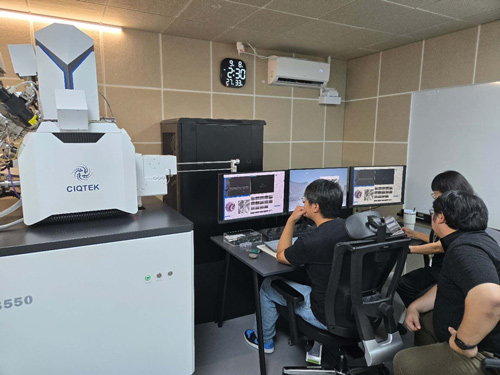
For many universities, national labs, and research institutes in regions such as Africa and the Middle East, access to advanced scientific instrumentation is often limited by budget, infrastructure, and maintenance challenges. Scanning Electron Microscopes (SEMs) are essential tools for materials science, life sciences, and education, but traditional models can be prohibitively expensive and difficult to maintain.

This is why affordable SEM solutions have become critical for resource-limited environments. But "affordable" should not mean compromising on performance or usability. Below, we explore the key factors to consider when selecting a cost-effective SEM and how CIQTEK is helping research communities worldwide overcome these challenges.


Why Resource-Limited Labs Need Affordable SEMs

In developing regions, researchers often face unique barriers:

  • Budget Constraints – High upfront costs and ongoing maintenance make many SEMs inaccessible. 

  • Infrastructure Limitations – Power supply stability, room conditions, and service availability can restrict choices.

  • Educational Demands – Universities need SEMs that are easy to learn, operate, and maintain for student training.

  • Service and Support Gaps – Remote locations often lack local technical support, making reliability and remote assistance crucial.

For example, a university in East Africa wanted to give engineering students access to SEM imaging. A million-dollar instrument was out of reach, but a cost-effective, compact SEM made it possible to expand their curriculum and attract new research collaborations; A national lab in the Middle East struggled with power fluctuations that frequently disrupted their older high-end SEM. Switching to a robust, lower-maintenance system ensured consistent imaging and reduced downtime.


What to Look for in an Affordable SEM

When evaluating SEM options for resource-limited labs, consider the following:

  • Total Cost of Ownership
    Not just the purchase price, factor in maintenance, consumables, and energy use.

  • Ease of Use
    A user-friendly interface helps reduce training costs and allows students and new researchers to get hands-on quickly.

  • Durability & Reliability
    Instruments should perform consistently even in less-than-ideal lab conditions.

  • Remote Support & Training
    For institutions far from service centers, remote diagnostics, online training, and virtual demonstrations are essential.

  • Scalability
    SEMs should be versatile enough to support both teaching and research, making them a long-term investment.


CIQTEK SEM: Affordable Without Compromise

At CIQTEK, we’ve worked with institutions worldwide to deliver SEMs that combine affordability with reliability. Our systems are designed for teaching labs, national facilities, and emerging research groups that need dependable performance without excessive cost.

  • Budget-Friendly Pricing – Enables universities and labs to invest in advanced imaging while leaving room for consumables, training, or lab expansions.

  • Low Maintenance Design – Reduced service needs mean fewer interruptions and lower long-term costs.

  • User-Friendly Interface – Ideal for classrooms, making SEM operation accessible to undergraduates and postgraduates alike.

  • High-Quality Imaging – Clear results suitable for materials science, biology, and applied engineering research.


Whether for a teaching university in Africa or a national lab in the Middle East, CIQTEK SEMs provide a reliable and affordable choice that empowers scientific discovery.

CIQTEK SEM microscope


>> If you’re looking for a cost-effective SEM, contact CIQTEK today to learn how our SEM instruments can support your research and teaching needs.

Recently, a team led by Wang Haomin from the Shanghai Institute of Microsystem and Information Technology of the Chinese Academy of Sciences made significant progress in studying the magnetism of zigzag graphene nanoribbons (zGNRs) using a CIQTEK Scanning Nitrogen-vacancy Microscope (SNVM).


Building on previous research, the team pre-etched hexagonal boron nitride (hBN) with metal particles to create oriented atomic trenches and used a vapor-phase catalytic chemical vapor deposition (CVD) method to controllably prepare chiral graphene nanoribbons in the trenches, obtaining ~9 nm wide zGNRs samples embedded in the hBN lattice. By combining SNVM and magnetic transport measurements, the team directly confirmed its intrinsic magnetism in experiments. This groundbreaking discovery lays a solid foundation for the development of graphene-based spin electronic devices. The related research findings, titled "Signatures of magnetism in zigzag graphene nanoribbons embedded in a hexagonal boron nitride lattice," have been published in the prestigious academic journal "Nature Materials".


Graphene, as a unique two-dimensional material, exhibits magnetic properties of p-orbital electrons that are fundamentally different from the localized magnetic properties of d/f orbital electrons in traditional magnetic materials, opening up new research directions for exploring pure carbon-based magnetism. Zigzag graphene nanoribbons (zGNRs), potentially possessing unique magnetic electronic states near the Fermi level, are believed to hold great potential in the field of spin electronics devices. However, detecting the magnetism of zGNRs through electrical transport methods faces multiple challenges. For instance, nanoribbons assembled from the bottom up are often too short in length to reliably fabricate devices. Additionally, the high chemical reactivity of zGNR edges can lead to instability or uneven doping. Furthermore, in narrower zGNRs, the strong antiferromagnetic coupling of edge states can make it difficult to detect their magnetic signals electrically. These factors hinder direct detection of the magnetism in zGNRs.


ZGNRs embedded in the hBN lattice exhibit higher edge stability and feature an inherent electric field, creating ideal conditions for detecting the magnetism of zGNRs. In the study, the team used CIQTEK's Room-Temperature SNVM to observe the magnetic signals of zGNRs directly at room temperature.


Figure 1: Magnetic measurement of zGNR embedded in a hexagonal boron nitride lattice using Scanning Nitrogen-vacancy Microscope


In electrical transport measurements, the fabricated approximately 9-nanometer-wide zGNR transistors demonstrated high conductivity and ballistic transport characteristics. Under the influence of a magnetic field, the device exhibited significant anisotropic magnetoresistance, with a magnetoresistance change of approximately 175 Ω at 4 K, a magnetoresistance ratio of about 1.3%, and this signal persisted even at temperatures as high as 350 K. Hysteresis was only observed under a magnetic field perpendicular to the plane of the zGNRs, confirming its magnetic anisotropy. Through analysis of the variation of magnetoresistance with tilting angle, the researchers found that the magnetic moment is perpendicular to the sample surface. Furthermore, the decrease in magnetoresistance with increasing source-drain bias and temperature revealed the interaction between magnetic response and charge transport and thermal vibrations.


Figure 2: Magnetic transport characteristics of 9-nanometer-wide zGNR devices embedded in hBN


This research, by combining Scanning Nitrogen-vacancy Microscope technology and transport measurements, directly confirmed the existence of intrinsic magnetism in hBN-embedded zGNRs for the first time, providing a possibility for controlling magnetism through an electric field. This work not only deepens the understanding of graphene's magnetic properties but also opens up new pathways for the development of spin electronic devices based on graphene.


Experience the Nano-scale Magnetic Imaging System


CIQTEK invites you to experience the Scanning Nitrogen-vacancy Microscope (SNVM) – a globally leading nano-scale magnetic field imaging system, operating at temperatures of 1.8~300 K with a vector magnetic field of 9/1/1 T, achieving a magnetic spatial resolution of 10 nm, and magnetic sensitivity of 2 μT/Hz1/2.


SNVM is a precision measurement instrument that combines Diamond Nitrogen-vacancy (NV) Optically Detected Magnetic Resonance (ODMR) technology with Atomic Force Microscopy (AFM) scanning imaging technology. It features high spatial resolution, high-sensitivity magnetic imaging, versatile detection capabilities, and non-invasive detection advantages, making it important in areas such as magnetic domain characterization, antiferromagnetic imaging, superconductor characterization, and research on two-dimensional magnetic materials.

Room temperature version of SNVM

Cryogenic version of SNVM


Beyong Nano, a leading innovator in nanotechnology, is set to unveil its groundbreaking model CIQTEK SEM3200 at the prestigious 33rd International Materials Research Congress taking place in Cancun, Mexico.


The Congress, known for bringing together pioneers and visionaries in the field of materials science, provides Beyong Nano with the perfect platform to showcase CIQTEKlatest technological marvel.


The Scanning Electron Microscope is poised to revolutionize the industry with its advanced features, unparalleled performance, and potential applications across various sectors. 


Visitors to the Beyong Nano booth at the congress can experience firsthand the transformative potential of the model 3200 and engage with the company's team of experts to learn more about its features, applications, and future developments.

We, CIQTEK, are pleased to invite you to the Electron Microscopy Conference 2025, held from October 13th to 15th, 2025, at the Theodor Bilharz Research Institute, Egypt. 


The theme of this year's conference is: "The Importance of Electron Microscopy in Enlightening the Invisible". It reflects the profound impact that electron microscopy continues to have across diverse scientific disciplines, from biology to materials science.


Over the conference's three days, we will have the opportunity to engage in in-depth tutorials, keynote sessions, and explore the latest technological advancements in the field of Electron MicroscopesIt will follow a Hybrid format, allowing participants from around the world to join us both in person and virtually, ensuring an inclusive and accessible experience for all.


Meet us at ESEM

Date: October 13 - 15, 2025


LocationTheodor Bilharz Research Institute, Egypt